How to Spot a Failing Commercial Roof Before the Next Tarrant County Storm
Every spring, fast-moving lines on US 287 and along I-35W remind property owners that Tarrant County storms do not wait on maintenance calendars. In Burleson, south Fort Worth, and Johnson County, a commercial roof can look quiet one week and leak into three suites the next. The difference is not luck. The difference is whether a disciplined inspection found the weak points before the first hail core or outflow boundary hit. A Burleson TX roofing company with commercial depth understands how local roofs age under North Texas heat, hail, and wind. It sees the failure patterns a season ahead and documents what must be fixed now, not after the claim adjuster walks the deck.
SCR, Inc. General Contractors writes this from daily field work across 76028, 76097, and the south Fort Worth corridor. Teams move from Old Town Burleson to Hidden Creek Parkway, from the Wilshire Boulevard retail corridor to warehouse roofs along the US 287 frontage. The same crews cover Dallas CBD at 75201, Arlington near 76011, Plano at 75024, and Terrell at 75160 via I-20, I-30, and US 80. They see what fails first on TPO, PVC, EPDM, modified bitumen, BUR, and standing-seam metal when a North Texas system rolls east over Crowley, Everman, and into Burleson.
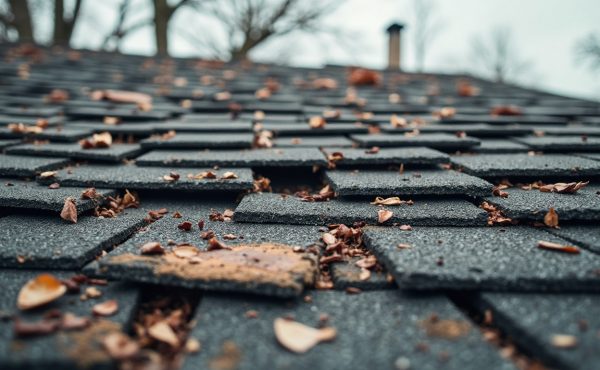
Why failures appear before storms in Burleson and south Fort Worth
North Texas sits in one of the most active hail belts in the country. DFW sees about 8 to 12 hail events per year that produce stones an inch or larger. Spring brings supercells that push 2-inch hail along I-35W and into southeast Tarrant County. Summer then drives weeks of 95 to 105 degree heat that oxidizes and shrinks membranes. Fall brings strong cold fronts that test edge metal and coping seams. Winter freeze-thaw cycles open hairline splits at parapet walls. All of it adds up to one point. Minor weaknesses formed by UV exposure, thermal movement, and foot traffic turn into leaks when wind, hail, and driven rain arrive.
In Burleson, roofs along Wilshire Boulevard and the Alsbury Boulevard retail spine show the same pattern. Solar loading is strongest on south and southwest exposures. That zone faces the brunt of UV and afternoon heat. The first measurable changes often show at heat-welded seams on TPO and PVC, at pressure-sensitive tapes on EPDM, and at granule-surfaced modified bitumen cap sheets where mineral loss exposes asphalt. Standing-seam metal at 24-gauge Galvalume holds well, but high-ridge fasteners on adjacent R-panels back out under vibration. Skylight perimeters and HVAC curb flashings chalk and crack. The clues are visible long before a ceiling tile stains near Renfro Street.
Early warnings by roof system type
TPO single-ply
TPO membrane relies on heat-welded seams. Under North Texas UV, the top ply slowly embrittles. Over time, welds at end laps and T-patches lose flexibility. A clean weld looks flat and homogenous. A failing weld shows micro-cracks, uplift at corners, or a gray oxidation line that resists a probe. The south-facing slope often shows it first. A surprising but repeatable pattern across the DFW market is that roughly 60 percent of TPO roofs older than 12 years exhibit measurable seam degradation along south or southwest exposures. Burleson shopping centers built in the 2008 to 2012 wave are entering that risk window now. On mechanically fastened systems, rows of fasteners print through the sheet. The membrane relaxes between rows. Wind then works the sheet, and cap washers can cut the back of the membrane. Those are quiet problems until a storm peels a corner at a parapet return.
PVC and KEE-PVC
PVC handles chemicals and ponding better than TPO, but plasticizer migration is real in older blends. Welds can become shiny and brittle. Corners at curb flashings craze or check. Pulling a hand-seam test on a 15-year-old field weld in Burleson often shows a peel failure at lower force than the manufacturer’s standard. South slopes again lead failure. KEE-PVC slows the drift but does not erase it. A Burleson TX roofing company fluent in single-ply chemistry will document weld condition, not just look for holes.
EPDM rubber
EPDM ages well in UV compared to TPO and PVC. The weak link is seams and penetrations where pressure-sensitive tape or primer was used. After 12 to 18 years of heat and movement, seam tape can lose adhesion. Lap edges show a dust trail where air infiltrates. Fishmouths open at end laps. Pipe boots crack at the accordion folds. If a storm pushes driven rain out of the south, these edges take on water and feed insulation saturation. Wet polyiso under EPDM squishes and never fully dries, which drags the R-value down and grows mold against the deck.
Modified bitumen and BUR
On Wilshire Boulevard and US 287 legacy retail, two-ply or three-ply modified bitumen and older BUR are common. Heat blisters on cap sheets tell a story. Blisters are pockets of trapped moisture or gas that expand in heat. Foot traffic pops them and opens a path for water. Ridging along the roll edge signals movement between plies. Alligatoring in BUR signals oxidized asphalt and a brittle surface. Parapet wall flashings split where the horizontal roof membrane transitions to the vertical wall if metal counterflashing is short or sealant is expired. Storm water then tracks behind the flashing and shows up as staining two tenant bays away from the source.
Standing-seam metal and R-panel
Standing-seam metal in 24-gauge or 22-gauge Galvalume with Kynar 500 coating gives long service, but the details matter. Panel clips need to allow movement. If clips bind or installers over-tightened, panels oil can and crease under thermal swing. Fasteners back out on exposed-fastener R-panels. Neoprene washers crack after years of sun. At transitions to walls, closures can be missing or misaligned. Wind-driven rain then rides the rib and bypasses the closure. The water shows at the wall line on interior gypsum months after the crew left.
SPF foam and coatings
Spray polyurethane foam with a silicone or acrylic coating gives good insulation and fast watertightness. The weak spot in North Texas is UV erosion when coatings thin. A silicone topcoat should maintain film thickness across the service life. When it wears down, foam chalks and pinholes open. Hail leaves craters. A recoat cycle neglected for one extra season often turns into a partial tear-out instead of a simple clean and recoat.
Burleson properties carry distinct risk points
Across the Burleson Commons retail district and the Highway 174 corridor, most roofs drain to internal drains or through-wall scuppers. Debris from spring oak tassels and summer storms loads those sumps. When a one-inch-per-hour cell sits over Hidden Creek, clogged drains turn into ponding. Positive slope from tapered polyiso only works if water has an exit. Ponding shortens membrane life and adds load to the structure. A throat-sized obstruction in a drain bowl can hold thousands of pounds of water across a big box. That live load matters on 1980s B-deck and light-gauge steel joists.
Parapet walls at older centers often have coping caps that were never fully cleated. Wind shakes them. Gaps open at joints. Coping fasteners back out. Water rides the top of the wall and drops behind the base flashing. The leak then pops tiles three bays over. Skylights at car dealerships along South Burleson Boulevard and medical office buildings near Alsbury show perimeter cracks and failed gaskets. HVAC curb flashings leak where old mastic has shrunk back. Each of these is visible and fixable well before a storm if someone inspects them with intent.
The inspection discipline that finds leaks before they happen
Finding problems early is not about a quick walk and a phone snapshot. It is a repeatable procedure tied to North Texas conditions and manufacturer standards. The sequence should match a twice-annual rhythm. Spring pre-storm season between February and April. Fall pre-freeze between September and November. Property managers who run this cycle across Burleson, Fort Worth, Dallas, Arlington, Plano, Frisco, and McKinney avoid surprise calls during a downpour on I-20.
The technical stack matters. An infrared moisture survey maps wet insulation under an intact membrane. Wet polyiso loses R-value and telegraphs as a thermal anomaly near sundown. Core sampling confirms the assembly, checks for trapped moisture, and secures a physical record. Water testing traces a leak path at a difficult curb. Fastener pull tests on metal systems validate holding strength where wind exposure is highest, like corners and perimeters near I-35W. Drain and scupper inspections include clearing, not just observing. Parapet wall and coping inspections include checking joints, cleats, and reglets. Sealants at penetrations and counterflashings are examined with a probe, not a glance. The inspection report then ties photos to a plan diagram with grid references and a clear work order list.
In 2026 across DFW, a single commercial roof inspection typically runs $0.05 to $0.15 per square foot depending on size, height, and access. An annual maintenance program with two inspections and minor sealing, drain service, and documentation typically ranges from $0.20 to $0.50 per square foot. Portfolio inspections for asset managers are often billed by building with flat fees between $300 and $800 per site visit in the DFW core. These numbers sit next to documented savings when a $500 inspection catches a coping failure that would have become a $40,000 interior loss after the next Tarrant County hail night.
Local data points that property teams share
Two facts tend to change decisions in Tarrant County. First, DFW averages 8 to 12 hail events each year that produce one-inch or larger stones. Roofs older than 15 years, especially mechanically fastened single-ply without a cover board, often see total replacement after one major hail event. Second, field data across the DFW metroplex indicates that about 60 percent of TPO roofs older than 12 years show measurable seam degradation on the south-facing slope due to UV and heat. Both facts have been seen repeatedly in Burleson and south Fort Worth during 2024 and 2025 inspections after high-volume hail seasons.
For portfolio facility managers in DFW
Managing five to thirty sites from 76102 in Fort Worth to 75201 in Dallas and out to 75032 in Rockwall requires consistent reporting and a clear triage matrix. The inspection product must sort roofs into three lanes. Maintain and seal this quarter. Targeted repairs and minor restoration in the next 12 months. Replacement planning with budget windows and warranty options. The report should list attachment type, membrane type and thickness, insulation type and R-value, deck type, and warranty status. It should include infrared moisture maps and mark any saturated areas for possible section replacement at $4 to $12 per square foot if cut-out is preferred over full replacement. The matrix should also flag roofs that qualify for coating restoration under silicone or acrylic if the field is sound and seams can be reinforced, which often delivers a 10 to 15 year life extension at 30 to 50 percent of replacement cost.
Insurance, hail, and HB3 compliance
After hail, owners in Burleson, Crowley, and Mansfield move fast. That is when documentation and Texas Department of Insurance HB3 compliance protect outcomes. HB3 set contractor conduct standards after storms. A Burleson TX roofing company with a local base and HB3 practice does not solicit with promises, does not waive deductibles, and provides clear scope and contract terms. The first step after a storm is a post-storm inspection that documents damage mapping across the field, hail bruises on TPO, punctures on EPDM or modified bitumen, indentations on metal panels, and wind-lifted membrane edges. Photographs tie to a layout. The scope uses Xactimate line items that match insurer frameworks. Adjuster meeting representation keeps scope aligned with actual conditions. Supplements cover hidden damage found after tear-off, like saturated polyiso or damaged steel deck. This work builds on the same pre-storm inspection discipline. It also avoids claim denials for pre-existing conditions by showing a paper trail of maintenance through the year.
What it costs to ignore early signs in Burleson
Consider a 40,000 square foot industrial building near NE Renfro Street with a 2007 mechanically fastened TPO system and no cover board. Minor seam oxidation and two split corner patches are noted in spring but no repairs are made. In May, a storm tracks over Everman and hits Burleson with one and a quarter inch hail and 60 mile per hour gusts. The south slope leaks across 5,000 square feet of production floor. Insulation saturates. Cut-out and replacement of 8,000 square feet at $8 per square foot costs $64,000 plus interior damage. The same roof could have been stabilized with a $3,500 multi-point weld reinforcement, two new T-patches, and fresh curb flashing two months earlier.
Or consider a 1980s strip center along Wilshire Boulevard with BUR over lightweight insulating concrete and through-wall scuppers. Spring forgets a simple drain cleaning. A June cell drops two inches of rain in forty minutes. Ponding water over a blocked scupper adds load. The deck holds, but water rides the base flashing and opens a leak into three suites. Drywall, flooring, and tenant business interruption add $25,000 to the tally. Twice-annual inspections at $0.30 per square foot per year would have included drain service and a photo of the obstruction for $3,000 annually on a 10,000 square foot center.
How an inspection day actually runs
In practice, crews staged out of Terrell at 107 Tejas Dr 75160 or out of the Fort Worth side meet at dawn near I-35W and Alsbury. The roof is walked in a grid. Field seams, end laps, and perimeters receive probe checks. Penetrations and curbs are tested. Parapet walls and coping joints get hand checks. Drains and scuppers are cleared. Photos are indexed. Infrared scans run near sundown for thermal contrast if the assembly warrants it. Core samples are taken at suspect areas with patches heat-welded or sealed on the spot. A short owner walk follows with initial findings. Within 48 hours, a written report lands that includes conditions, prioritized actions, budget ranges, and manufacturer-specific options if warranty work is preferred through GAF, Carlisle, Firestone, Johns Manville, Versico, Sika Sarnafil, or Mule-Hide.
When maintenance, restoration, or replacement makes sense
Inspection findings drive one of three routes. If the membrane is mid-life with isolated issues, targeted repairs solve it. Typical spot leak repairs in DFW run $500 to $2,500 per service visit. Multi-point repairs with welded patches, sealant work, drain resets, and curb flashing upgrades often range from $1,500 to $6,000, scalable to roof size. If the field is intact but seams and details are tired, restoration is next. Silicone restoration systems priced at $2.50 to $5.00 per square foot or acrylic at $1.75 to $3.50 per square foot extend roof life 10 to 15 years and come with manufacturer warranties when installed by authorized applicators. If infrared finds widespread saturation or the membrane has reached end of life, plan replacement. In 2026, fully adhered 60-mil TPO systems in DFW typically install at $6 to $12 per square foot depending on deck repairs, insulation, and access. PVC at $8 to $14, EPDM at $7 to $13, modified bitumen at $10 to $18, and standing-seam metal at $14 to $24 round out the range. SPF with coating often runs $5 to $9 for the system. Warranty options up to 25 or 30 years exist through GAF Diamond Pledge, Carlisle Total Roofing System Warranty, Firestone Red Shield, Johns Manville Peak Advantage, and Versico programs when assemblies meet specification.
The reporting standard that earns budget approval
Facility managers across Arlington, Plano, Frisco, and McKinney do not get budgets on feelings. They get budgets on evidence. A strong inspection package includes a roof plan with numbered locations, photos labeled to that plan, a list of recommended repairs by priority and cost range, infrared moisture maps if used, core sample logs with assembly detail, a list of immediate safety hazards, and warranty status with manufacturer contacts if applicable. It closes with three paths. Repair scope with pricing ranges. Restoration scope with system selection, expected service life, and warranty options. Replacement scope with attachment method choices, insulation R-value for climate zone 3A, tapered design for positive drainage, and edge metal specification. That single document lets an owner at 75201 or 75024 approve spend without three extra meetings.
Red flags that deserve fast scheduling in Burleson
These are the visual cues most often seen in Burleson and south Fort Worth that point to failures before storms intensify. They can be spotted during a routine site walk or after a windy day on I-35W.
- Standing water around drains or scuppers more than 48 hours after a rain. Loose or lifted TPO or PVC seams at corners, end laps, or T-patches on south-facing slopes. Granule loss, blisters, or ridges in modified bitumen cap sheets near parapet transitions. Backed-out fasteners and cracked washers on R-panel metal, especially at high ridges and eaves. Split sealant lines at skylight perimeters, pipe boots, or HVAC curb flashings.
Information to have ready when calling
Calls go faster when a few facts are handy. A Burleson TX roofing company can still dispatch without them, but they help target the right crew and materials.
- Approximate roof age and known membrane type if available. Any active leaks mapped to interior locations by grid or tenant suite. Past warranty details, if a GAF, Carlisle, Firestone, Johns Manville, Versico, Sika Sarnafil, or Mule-Hide warranty is on file. Roof access notes, ladder or hatch, and any security restrictions. Preferred window for inspection around tenant hours, especially along Renfro Street, Wilshire Boulevard, or the Burleson Commons area.
Why local presence matters during storm season
After a big hail night along I-20 and I-30, trucks with out-of-state plates roll into Tarrant County. They do not know the Burleson market, they do not hold local manufacturer authorizations, and they do not return for warranty service. HB3 exists because of the problems that follow. A firm that works Burleson weekly and stages from Terrell along US 80 can reach 76028 and 76097 quickly via I-635, I-30, and I-820. It can deploy 24/7 when a leak hits at 2 a.m. At a south Fort Worth distribution center. It can coordinate warranty work under NDL terms because it is already an authorized applicator. That difference shows up in fewer callbacks and in clean insurer files during heavy-claim years like 2024 and 2025.
A note on energy and code in climate zone 3A
When inspection findings point to replacement, insulation and attachment decisions follow North Texas realities. Polyiso insulation gives R-5.7 to R-6.5 per inch. Many DFW owners target R-25 to R-30 to improve summer performance. Tapered insulation pays back when it eliminates ponding that destroys membranes. Cover boards in gypsum or HD polyiso protect single-ply from hail and dull fastener lines on mechanically fastened systems. Fully adhered assemblies reduce flutter on high-ridge sites near I-35W. Mechanically fastened systems install faster and often at lower cost but can print rows and invite wind pumping in corners if not detailed to FM and UL uplift standards. Each choice shows in service life during hail and in day-to-day expansion across Tarrant County heat cycles.
Skylights, safety, and access
Inspections must include skylights, roof hatches, and safety tie-off points. Acrylic skylights haze and crack. Curb flashing often gets a one-time mastic bead in year one and then nothing. OSHA tie-off anchors and guardrails protect trades and tenants during service. Permanent walkways save membranes from routine foot traffic near units on healthcare and hospitality roofs along South Burleson Boulevard and Hidden Creek Parkway. These items extend membrane life and reduce accidents during storm response when multiple trades land on the roof in a short window.
Metal edge and parapet discipline
Edge metal is often the first line of defense in wind. Drip edges and gravel stops must be installed to ANSI/SPRI ES-1 standards to hold during gust fronts. Coping caps should be properly cleated and joined. Counterflashings should not rely on surface mastic alone. On older centers in Burleson, many edges were never brought up to present standards. An inspection that flags those risks and budgets upgrades prevents wind from getting under the membrane during a storm and turning a minor repair into a large insurance claim.
Gutters, scuppers, and through-walls
Commercial gutters and downspouts fill quickly during spring storms that park over the Highway 174 corridor. Through-wall scuppers need clean throats and overflow scuppers should be clear. Hidden Creek Parkway sites with trees need special attention in April and May. Inspections that include cleaning and documentation reduce flood loads and give owners a record when insurers ask for maintenance history after a loss.
What owners gain by aligning inspection with manufacturer ecosystems
Manufacturers like GAF, Carlisle, Firestone, Johns Manville, Versico, Sika Sarnafil, and Mule-Hide offer system warranties that assume responsible maintenance. They also offer repair details for specific conditions. An inspection report that cites and follows those details keeps warranties intact and speeds approval for covered repairs. It also informs when a restoration system from a compatible brand can bridge the roof to the next capital cycle. For owners along the I-635 LBJ corridor or the President George Bush Turnpike with multi-city holdings, this alignment matters in lender due diligence and in sale transactions where a clean roof file moves deals forward.
Why this matters before the next Tarrant County storm
The stakes show up in tenant relations at Burleson Commons, in production hours at south Fort Worth warehouses, and in the ability to re-open after a night where AT&T Stadium and Globe Life Field both show storm tops on radar. A disciplined, local inspection program that speaks to real field conditions, that prices work on 2026 DFW numbers, and that connects to authorized manufacturer networks gives owners control. It turns surprise into scheduled work. It trades midnight emergency calls for a daytime weld and a clean drain photo in the file. That roof maintenance Burleson TX is how roofs in 76028 and 76097 stay quiet while storms ride the Tom Landry Freeway toward Dallas.
Ready for a commercial roof inspection in Burleson
SCR, Inc. General Contractors serves Burleson, Fort Worth, Dallas, Arlington, Plano, Frisco, McKinney, Mesquite, Forney, Garland, Rockwall, and the broader DFW metroplex from its Terrell headquarters at 107 Tejas Dr 75160. The operation runs 24 hours a day, 7 days a week for emergency leak response, with same-day dispatch across I-35W, I-20, I-30, I-820, and US 80. The team inspects and services TPO, PVC, EPDM, modified bitumen, BUR, standing-seam metal, R-panel, SPF, and coating systems. Field crews and project managers hold manufacturer authorizations with GAF, Carlisle, Firestone, Johns Manville, Versico, Sika Sarnafil, Mule-Hide, Polyglass, and GenFlex, and deliver manufacturer-backed system warranty coordination, including NDL coverage when specified. HB3-compliant storm restoration practices, Xactimate-trained estimators, free commercial roof inspections, and written photo reports support property managers across 76028, 76097, 76102, 75201, 76011, 75024, 75033, 75070, 75126, 75150, and 75032. To schedule a pre-storm commercial roof inspection with a Burleson TX roofing company that operates at DFW scale, contact SCR at (972) 839-6834 or visit scr247.com. A focused inspection now prevents the next tenant call during a Tarrant County storm and positions your roof for repair, restoration, or warranty-backed replacement when timing and budget are right.
For owners searching for a Burleson TX roofing company with true commercial credentials, SCR places trained eyes on the roof, documents what matters, and closes the loop with clear options. One phone call sets spring inspection on the calendar. One report gives a year-long plan. That is how assets along Wilshire Boulevard, Hidden Creek Parkway, and US 287 stay in service when the radar lights up.
SCR, Inc.
General Contractors
Roofing • Restoration • Storm Repair